You may own the brand. But can you prove you own the logo?
Most businesses know exactly where their logo is displayed. Far fewer can say who designed it, under what contract, which company owns the copyright and where the signed paperwork is kept.
The assets at the centre of the recent Entain Operations v Liquidity Trading dispute were not obscure designs gathering dust in an archive. They included the logos of Ladbrokes, Coral, bwin and Sportingbet, together with casino and gaming brands including Gala Bingo, Foxy Bingo and PartyCasino. These are prominent, long-established brands, acquired and developed over time.
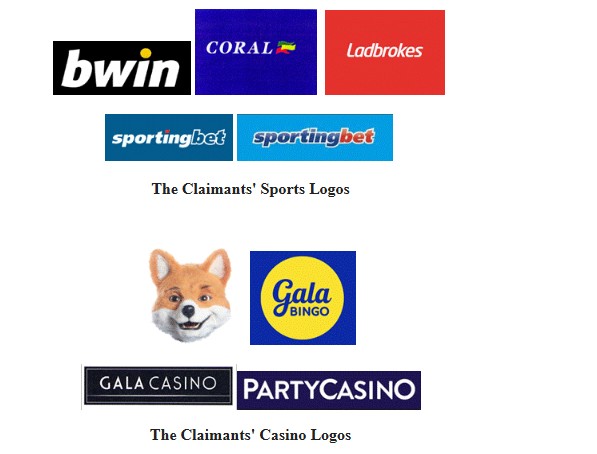
The point is visually striking. A business can use a familiar logo for years, invest heavily in it and display it to millions of customers, yet still face difficulty in answering questions about who created it, what changed between versions, how the copyright moved between companies and which legal entity is entitled to enforce it.
That distinction matters.
A logo may have appeared on every product, website, invoice and office wall for 20 years. It may have been massively used in advertising. It may be registered as a trade mark. The business may have paid handsomely for its creation. None of those facts necessarily provides a complete answer to a deceptively simple question:
If, in enforcing your intellectual property rights, a copyright claim is a part of your claim this deceptively simple question can, where records cannot be found, or at a minimum clearly identified, lead to an uncomfortable end.
Ownership changes when copyright is transferred by a legal document known as an assignment. In this context transfer and assign are interchangeable.
Copyright protection generally arises automatically. There is no registration certificate to place in the intellectual property file and no public register that provides an immediate answer on and evidences ownership.
That informality can encourage equally informal record-keeping.
Imagine a common scenario. A business commissions a design agency to produce a new brand identity. The agency supplies the final artwork, sends its invoice and moves on. The marketing director leaves. The agency is acquired or closes. Five years later, someone refreshes the logo. Ten years after that, the business itself is acquired.
By then, the business may have the logo in every imaginable file format but no easily accessible evidence of:
This is how a valuable brand asset acquires an impressive commercial history but a surprisingly hazy legal biography.
Under English copyright law, the author is ordinarily the first owner of copyright. The principal exception is where an employee creates the work in the course of employment where, subject to any agreement to the contrary, the employer is the copyright owner.
This all means that paying an external agency or freelancer to create a logo does not, by itself, assign ownership of the copyright. The UK Intellectual Property Office warns that, unless otherwise agreed in writing, the creator of a commissioned work will ordinarily be its first legal owner. The customer may, without realising it, have a licence to use the work without actually owning it.
A legal assignment of copyright must also be in writing and signed by or on behalf of the person assigning it.
The invoice marked “logo design: £12,000” may therefore show that the business bought a design service. It does not necessarily show that it bought the copyright (if that invoice is not supported by a contract that includes appropriate copyright assignment wording).
This issue came sharply into focus in Entain Operations v Liquidity Trading, a High Court decision dated 10 September 2026. The dispute included copyright claims relating to a collection of established logos and websites.
The court was not coming deciding finally who owned the copyright or whether infringement had occurred. This was a case-management judgment about whether the copyright case had been pleaded properly.
The claimants’ difficulty was that collective references to “the Claimants” and the wider corporate groups of which they were made up did not establish which company within those groups owned the copyright in which particular asset. The court also found that an acquisition, ownership of a registered trade mark and long-standing use did not, without more evidence, establish copyright ownership.
The copyright allegations were liable to be struck out by the court unless these evidential defects were corrected within a short prescribed period. This was, therefore, not a final finding by the High Court that the claimants had no copyright in the logos they used. It was, instead, a warning that a business cannot wait until litigation is under way to begin constructing the basic history of the copyright it wants to enforce. A business should have that history based on evidence ready to provide to the court.
Long use can be strong evidence that a logo is associated with a business. It does not necessarily identify the author, first owner or route by which copyright reached the company bringing a claim.
The same applies to trade mark registration. Copyright and registered trade mark rights may protect the same logo, but they are separate rights arising in different ways.
A registered trade mark certificate identifies the proprietor of the registered right. It does not establish who owns the copyright in the underlying artwork.
This distinction can become particularly uncomfortable after an acquisition of a business. The deal documents may say that “the brand” or “all intellectual property” is being assigned (transferred), but the practical questions (and which a court will want to see associated evidence of in a dispute situation) remain:
A purported buyer of these rights cannot obtain better title merely because everyone involved assumed the rights must be somewhere within the group.
There is another complication. Logos evolve.
A colour changes. A typeface is redrawn. A background device is added. The entire design is simplified for digital use. An agency produces a “refresh” while retaining the most recognisable parts of an older identity.
Each version may raise its own questions of copyright authorship, originality and ownership.
The records should therefore preserve more than the final artwork. A business should be able to identify the material versions of an asset, who produced each one and what changed.
Without that history, it may be difficult to explain what is original (from a copyright perspective) about the version being enforced. It may also be difficult to show that the alleged copying reproduces the elements in which the claimant actually owns copyright.
The answer is not to turn every marketing department into an archive staffed by copyright historians. It is to retain a short, usable record for important creative assets.
For each principal logo, website design, packaging concept, advertising campaign or other valuable brand asset, record:
This should be up-dated when the asset is re-designed, assigned (transferred) or licensed. It should also form part of acquisition due diligence and post-completion integration.
The exercise is usually straightforward when undertaken at the time. It becomes expensive and uncertain when attempted years later through former employees, dissolved agencies, incomplete email archives and contracts stored under filenames such as “FINAL final logo agreement v7”.
And, of course, this exercise is not specific to copyright in a logo. It applies to other copyright works.
A reliable chain of title backing up your proof of ownership of your copyright protected works isn’t only of value from an enforcement perspective.
It can make transactions easier, reduce due-diligence questions, support licensing arrangements and prevent disputes with former agencies or contractors. It also allows a group to identify the correct company within its group structure to give permission, grant a licence or bring a claim in respect of the copyright work.
Most importantly, it lets the business make decisions from evidence rather than assumption.
Hansel Henson advises businesses on copyright ownership, brand protection, intellectual property transactions and disputes.
If the ownership history of your logos or other key brand assets is unclear, we can carry out a focused provenance and chain-of-title review, identify gaps and help regularise the position before an acquisition, licence or enforcement action makes the issue urgent.
If you are planning an acquisition, licence or enforcement action, or cannot readily identify who owns your principal brand assets, we can undertake a focused copyright provenance and chain-of-title review.
Contact us to arrange a brand asset audit.




4th Floor, 37 Dean Street,
London, W1D 4PT


Email .(JavaScript must be enabled to view this email address)
Tel+44 (0)20 7770 6584
Fax+44 (0)20 7504 8717