
Your UI is a valuable asset - and protecting it just got easier in the UK
If you build consumer software, apps or games, your user interface does real commercial work every day: it guides user behaviour and differentiates your product, but is also often the first thing copied. The good news? The UK Intellectual Property Office (“UKIPO”) has confirmed that modern digital interfaces fall within registered design protection, with clearer guidance now making these rights easier to secure and enforce in practice.
Your UI is a valuable asset - and protecting it just got easier in the UK
If you build consumer software, apps or games, your user interface does real commercial work every day: it guides user behaviour and differentiates your product, but is also often the first thing copied.
The good news? The UK Intellectual Property Office (“UKIPO”) has confirmed that modern digital interfaces fall within registered design protection, with clearer guidance now making these rights easier to secure and enforce in practice.
What the UKIPO has clarified
On 21 April 2026, the UKIPO published new guidance clarifying its examination practice for registered designs, particularly where those designs relate to icons and graphic symbols, GUIs, screen layouts, menus and animated designs and transitions.
While digital interfaces have long been capable of protection, the guidance is particularly helpful for games and consumer apps, because it clearly explains how movement and animation can be protected using sequences of images. The focus is on filing designs in a way that makes the claimed interface clear on the register.
The example set out in the UKIPO’s Designs Practice Notice (DPN 1/2026) illustrates a clearly represented GUI suitable for registered design protection:
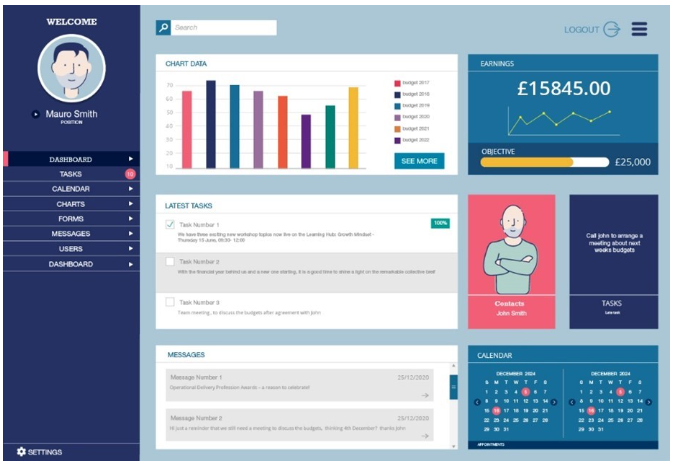
That same approach applies to animated interfaces, making it easier to protect features such as menu transitions, HUD animations and character or mode selection flows: all often highly distinctive, all frequently copied.
In short, both static and animated interfaces can be protected as registered designs, provided the overall impression is clear and unambiguous.
Why does that matter in practice?
Because registered rights work exceptionally well in securing takedowns.
In a takedown scenario, with a registered design, you are pointing to a registered right and showing that the competing interface produces the same overall visual impression. Ownership is clear from the register.
Copyright can still protect interfaces, but online it often creates friction. Platforms may ask you to prove title, explain subsistence and originality, or show copying rather than just similarity. That turns a takedown into a fact‑heavy dispute, making them slow.
Registered designs avoid much of that.
For app stores, games platforms and online marketplaces, the simplicity of a registered right is gold. It is far easier to assess and far quicker to act on.
Don’t forget about trade marks
Registered designs are strongest for early lifecycle protection and rapid enforcement.
But trade marks become more powerful as user recognition grows: app and game names, logos, symbols and recurring interface elements used as brand identifiers can be protected by trade marks, sitting alongside design protection.
The rights are complementary, not competing.
The takeaway
The real shift here is mindset. It’s not just registered trade marks that you can register to protect your product and market position.
The UKIPO is making it easier in practice for digital interfaces, whether static or animated, to be protected as registered designs.
For founders, studios and publishers operating in crowded digital markets, registered designs are no longer an obscure IP tool. They are one of the most enforcement‑ready rights available for digital products.
If your interface is central to how users recognise and interact with your product, it is worth reviewing whether it should be registered now. This is quick and relatively economical to do. Please contact Visha Patel or Margaux Auge or speak to your usual contact at Hansel Henson.



4th Floor, 37 Dean Street,
London, W1D 4PT


Email .(JavaScript must be enabled to view this email address)
Tel+44 (0)20 7770 6584
Fax+44 (0)20 7504 8717